
The long answer to the question: “can you salvage this unit?”
In heavy equipment and industrial maintenance, components are often labeled “beyond repair” long before the full picture is understood. In many cases, what’s really being described is actually beyond economical repair (BER) with a current vendor’s process. At High Tech Reman, we aim to push the boundaries of what is truly beyond repair, as well as what is truly “BER”.
As remanufacturing technology has advanced, these distinctions matter more than ever. Misclassifying a component can drive unnecessary replacement costs, longer downtime, and avoidable scrap. This article breaks down the difference — and explains how to make better decisions at the shop and engineering level.
“Beyond Repair”: When the Component Truly Cannot Be Saved
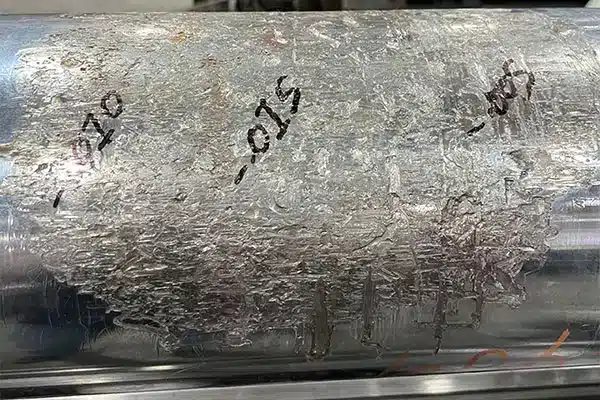
A component is beyond repair when its structural integrity or geometry can no longer be restored safely or predictably.
Examples include:
- Extensive cracking through load-bearing sections
- Severe base-material loss that compromises strength
- Unrecoverable distortion or loss of datum references
- Metallurgical degradation from extreme heat or fatigue
In these cases, no amount of remanufacturing work can return the part to service without unacceptable risk.
True “beyond repair” cases are rarer than most shops think.
“Beyond Economical Repair” [BER]: A Cost and Capability Decision
A part classified as beyond economical repair (BER) may be technically repairable, but the cost, risk, or cycle time outweighs replacement — given current methods.
Typical drivers include:
- High labor hours (e.g., full re-rods)
- Excessive secondary machining or honing
- High distortion risk leading to rework
- Limited in-house capability
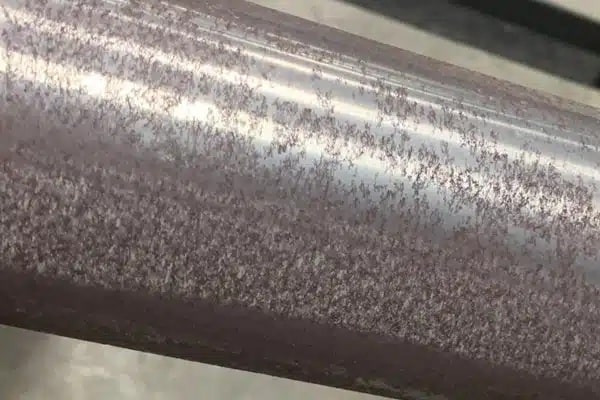
BER is not a fixed condition. It changes as:
- Repair processes improve
- Automation increases repeatability
- Material recovery methods advance
What was BER five years ago may be viable today. The converse is also true: as materials and manufacturing of new parts become cheaper, remanufacturing methods can fall behind the cost of new in rare cases.
Repairable: Recovery of Original Specifications
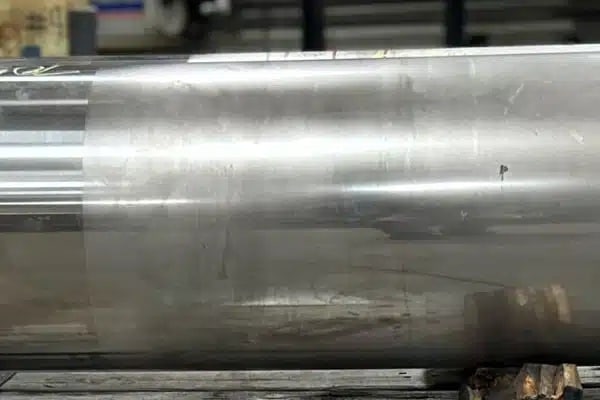
A component is repairable when damage occurs in accessible surfaces or localized geometry and the base material can be structurally repaired without compromising integrity.
Common indicators:
- Wear within recoverable limits
- No structural cracking. Shallow / surface-level cracks are often safely repairable with proper methods.
- Stable core geometry
- Predictable duty cycle
These parts are often ideal candidates for:
When done correctly, repaired components can deliver full service life at a fraction of replacement cost.
Why Misclassification Is So Common
Components are often scrapped because:
- Coatings are applied when metallurgical remanufacturing is required
- Shops rely on legacy repair paths
- Geometry issues are mistaken for material failure
- Economic models ignore life-cycle cost
The result is unnecessary replacement and lost value.

The result is unnecessary replacement and lost value.
A Practical Classification Framework
Before declaring a component beyond repair, our plant managers ask these questions:
- Is the base material structurally compromised?
- Can geometry be restored with controlled, repeatable processes?
- Has modern technology changed feasibility?
- What is the cost to perform this repair at-scale?
If the answer to #1 is no, the part likely deserves a second look.
“Beyond repair” should describe physical impossibility, not a lack of options.
Modern remanufacturing has moved the line — turning many BER components into reliable, cost-effective candidates for reuse.
Understanding the difference protects uptime, budgets, and material value — and keeps good steel working longer.