Robotic Welding Consistent Quality. Engineered Overlays. Built for Throughput.
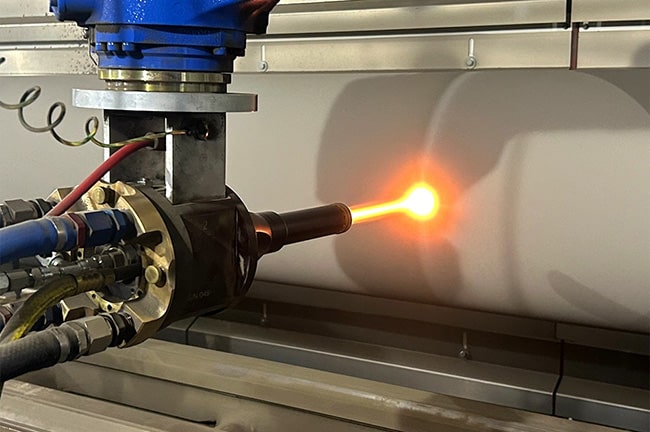
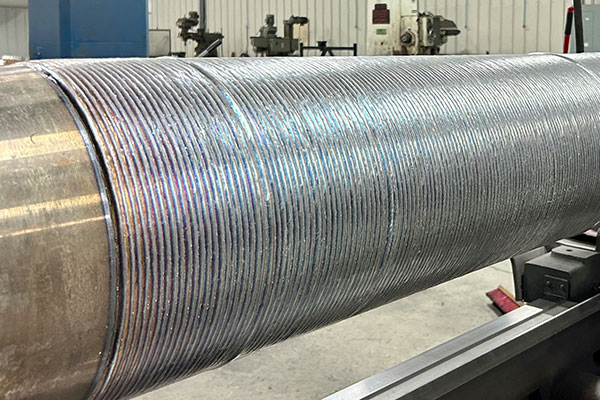
Our in-house robotic welding system was designed from the ground up for high-volume, repeatable remanufacturing. With proprietary wire alloys and optimized process parameters, we deliver precision overlays that restore critical components to OEM or better condition—faster, more reliably, and more cost-effectively than manual methods. Built specifically for industrial components with recurring wear profiles, our robotic solution ensures consistent results and short lead times while maintaining full integration with downstream machining, grinding, and finishing.
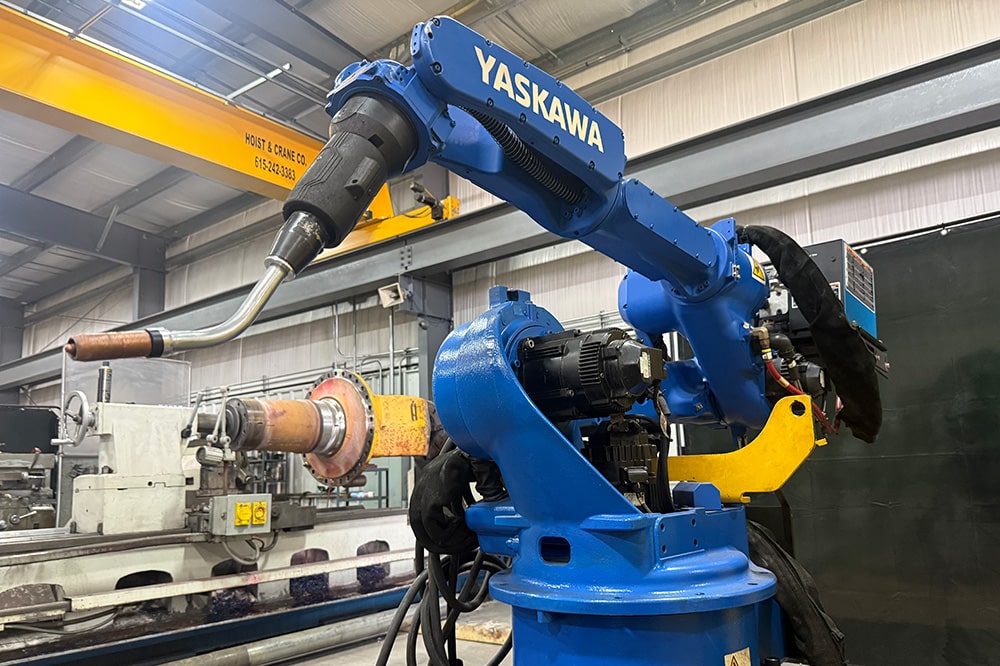
Robotic Welding Applications
- Wheel Spindles & Axle Components
- Pivot Pins & Joint Interfaces
- Brake and wheel components (pistons, anchors)
- Any repeatable, weld-overlay-driven part
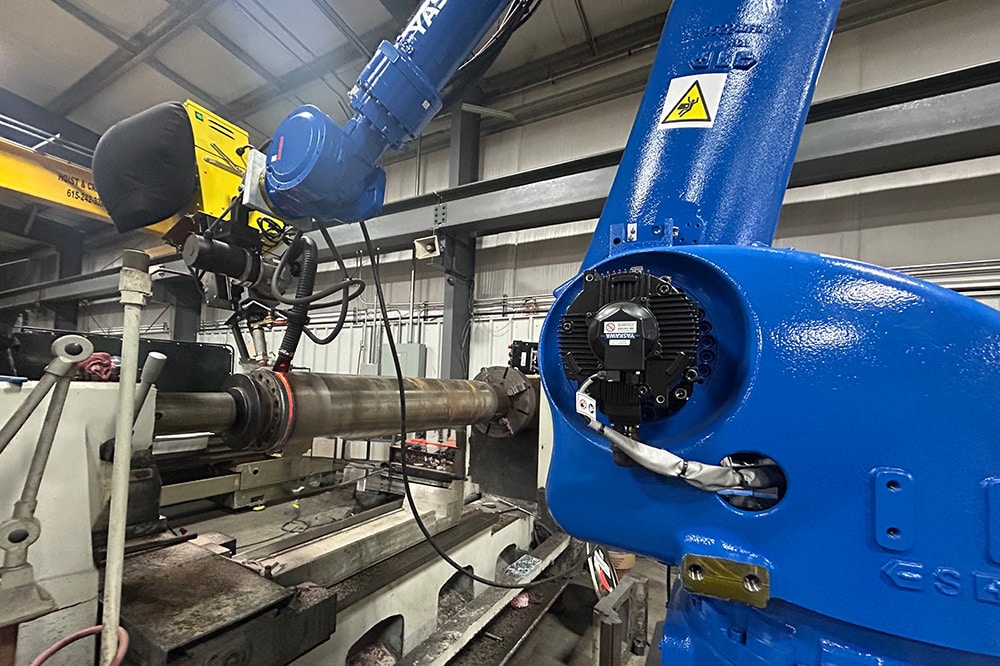
Our Capabilities
- Robotic MIG overlay with custom-developed wire formulas
- Custom-designed robotic SAW overlays with proprietary wire/flux combinations
- Ideal for high-turnaround, repeat part numbers
- Consistent bead geometry and minimal post-weld cleanup
- Designed for easy changeover between product families
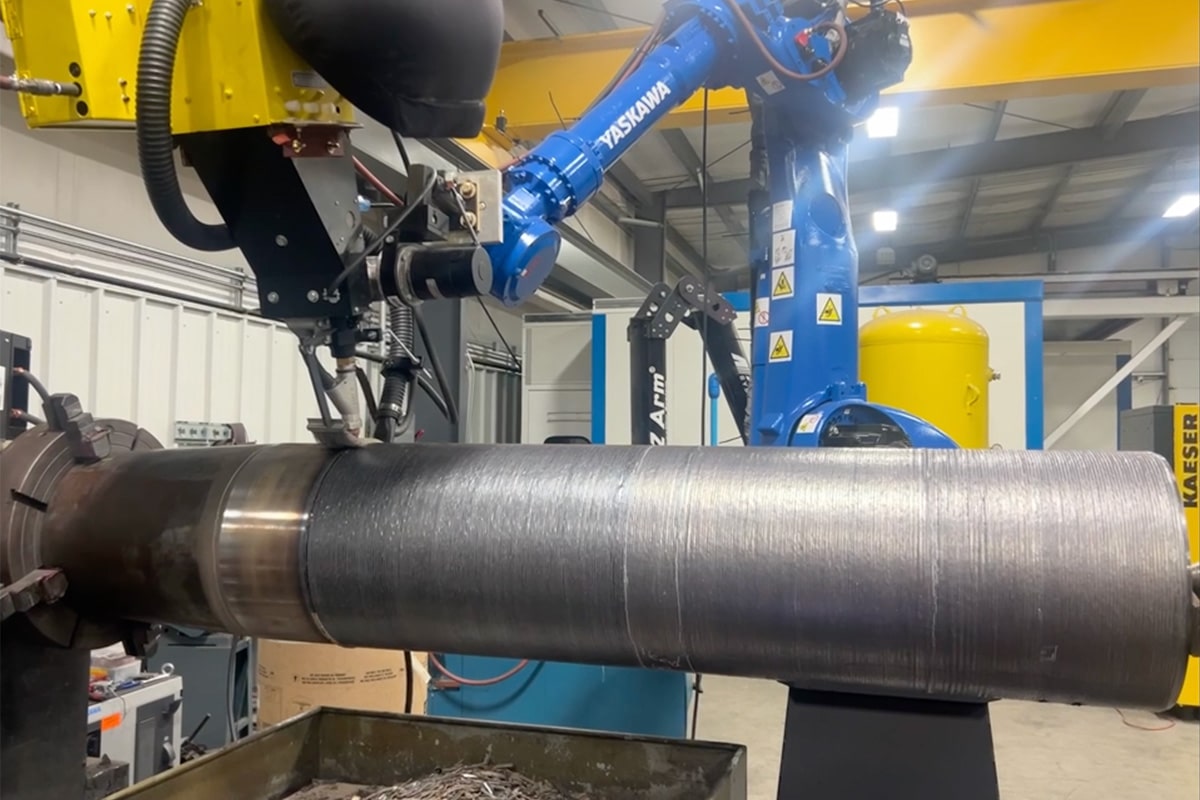
Why High Tech Reman for Robotic Welding?
- Proprietary Processes — Custom wires and welding procedures built for
remanufacturing durability - Repeatability at Scale — Engineered around high-throughput workflows with
precise, automated deposition - Cost-Effective Precision — Reduces labor, eliminates inconsistency, and delivers
OEM-grade welds at scale
Robotic Welding FAQ Topics
What advantages does robotic welding bring to remanufacturing?
Robotic welding delivers unmatched consistency, precision, and efficiency for remanufactured components. It ensures uniform bead geometry, optimized heat input, and repeatable weld quality, reducing distortion and rework while improving throughput.
How do robots improve weld consistency and repeatability?
Our robotic systems maintain tight process parameters, including travel speed, arc length, and pitch. This automation eliminates human variability, producing identical welds across high-volume or critical components.
Can your robotic system handle large, heavy components?
Yes. Our robotic cells are designed for large, heavy parts such as the largest mining haul truck spindles and industrial shafts. We use positioners and engineered fixturing to rotate and weld components weighing several thousand pounds with full access and control.
How is weld data monitored and recorded for QA traceability?
Each robotic weld cycle is logged with real-time parameter tracking, including voltage, amperage, travel speed, and deposition rate. This data is archived for quality assurance and full component traceability.
What are the typical time savings or throughput gains vs. manual welding?
Robotic welding typically delivers significantly faster cycle times compared to manual welding, depending on geometry. More importantly, it eliminates variability, reducing inspection and rework time while increasing total throughput capacity.
Can robotic weld procedures be customized for specific customer components?
Absolutely. We develop component-specific robotic programs and welding procedures based on material type, geometry, and service environment. Each routine can be optimized for overlay thickness, alloy chemistry, and cooling control to meet unique performance targets.
Our Services
Expansive in-house capabilities allow us to keep all facets of the chrome plating and repair process under our control.